In early 2026, talent acquisition leaders are operating in a labor market defined by contradiction. Overall hiring demand has cooled in several sectors, yet competition for highly specialized skills remains intense. According to the U.S. Bureau of Labor Statistics, labor market churn has moderated compared to the peak of the Great Resignation, while persistent shortages in healthcare, technology, and other skill-constrained fields continue to pressure employers.
For Recruitment Process Outsourcing (RPO) providers and talent leaders, this creates a strategic tension. Clients are freezing some roles while urgently pursuing others that are critical to business continuity or transformation. Traditional recruiting playbooks are being stress-tested.
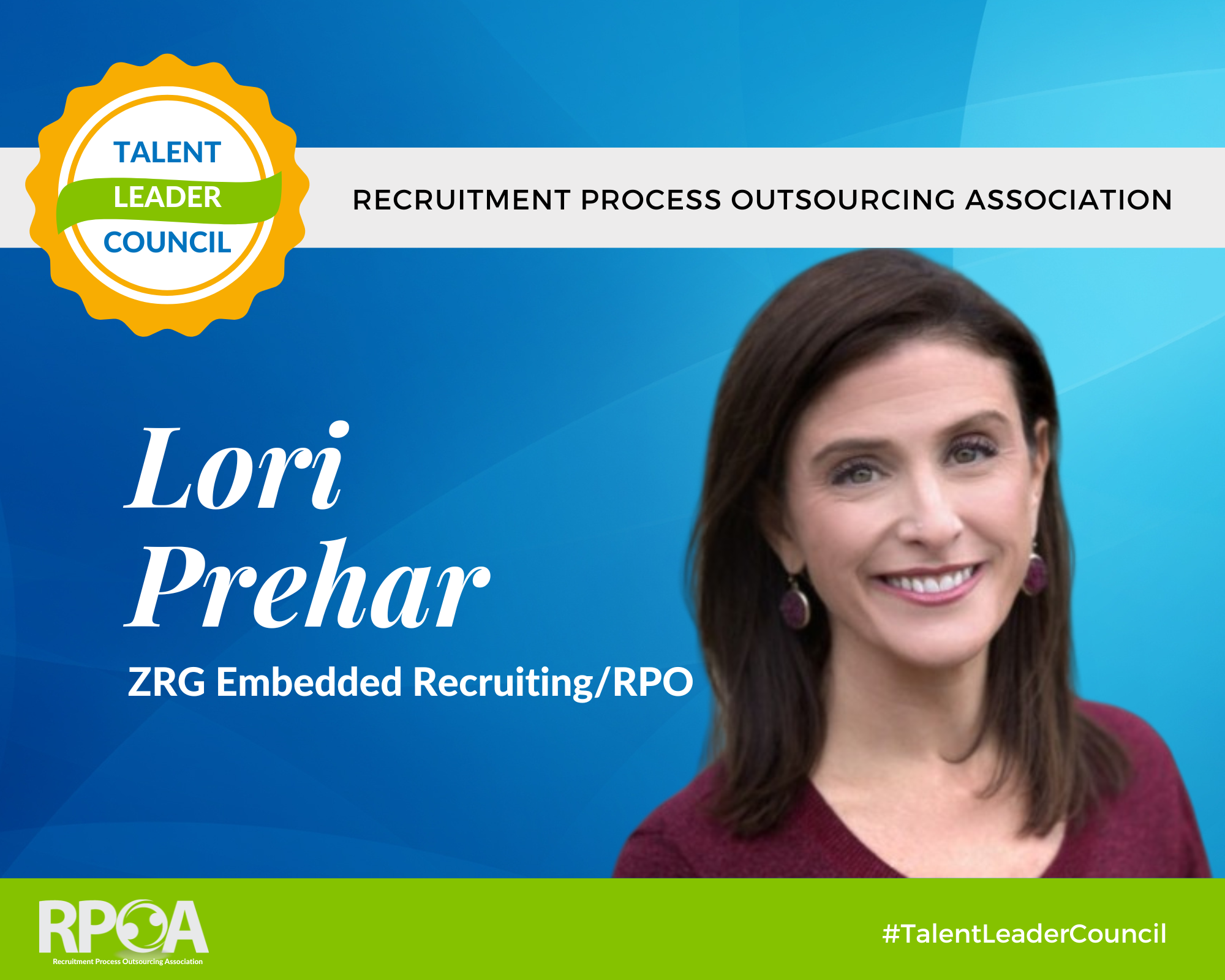
In a recent Talent Leader Council conversation, Lori Prehar, Managing Director of Embedded Recruiting at ZRG and a Talent Leader Council contributor, shared how she is navigating this dynamic. This article is based on an edited version of a recorded interview conducted by Lamees Abourahma, CEO of the Recruitment Process Outsourcing Association (RPOA), as part of the Talent Leader Council interview series.
Key Takeaways for Talent Acquisition Leaders
- Treat uneven hiring demand as a portfolio challenge, not a binary freeze-or-hire decision.
- Address skill shortages through internal upskilling and creative talent development before defaulting to external searches.
- Personalization and relationship-driven recruiting are strategic differentiators in a risk-averse candidate market.
- Skills-first hiring requires stakeholder alignment and contextual judgment, not ideology.
- Flexible, embedded Recruitment Process Outsourcing (RPO) models can protect margin while delivering targeted impact.
Uneven Demand Is the New Normal: How Should Talent Leaders Respond?
The current labor market is not uniformly hot or cold. It is segmented. Some executive and leadership pipelines are experiencing reduced demand, while other roles remain business critical.
RPOA: When clients are slowing hiring in some areas but urgently seeking niche talent in others, what are you seeing in the market?
Prehar: Hiring demands can be described as a “zigzag”. Some categories are clearly cooling, while others remain indispensable. “Hospitals cannot function without nurses,” she notes, pointing to essential roles that cannot be deferred. At the same time, internal talent teams are often staffed with generalists who struggle to fill highly specialized or technical roles.
Rather than duplicating internal efforts, Prehar emphasizes augmentation. Her goal is “zero redundancy.” Embedded recruiting support is deployed temporarily to address bottlenecks, whether that means sourcing specialists or supporting peak hiring cycles.
This portfolio mindset has direct implications for RPO operating models. Instead of treating hiring freezes as full stops, talent leaders should map critical capabilities against business risk. Where does hiring directly affect revenue, compliance, or service delivery? Where can hiring be deferred?
The ability to flex resources toward high-impact roles while protecting margin is increasingly central to Recruitment Process Outsourcing (RPO) value.
Solving Skill Gaps: Build, Don’t Just Buy
Persistent skill shortages are not new, but rapid technological shifts, including artificial intelligence adoption, are accelerating the gap. The World Economic Forum’s Future of Jobs Report highlights the speed at which new roles are emerging and legacy skills are becoming obsolete.
RPOA: When the skills simply do not exist in sufficient supply, what should organizations do?
Prehar: She points to creative upskilling as a strategic lever. She shares examples of organizations retraining internal employees to fill high-demand roles rather than waiting for perfect candidates to appear. In her own division, when experienced technical sourcers were scarce, her team hired individuals with strong sales backgrounds and built a “tech sourcing boot camp” to develop the capability internally.
“The companies that are winning are getting scrappy and creative,” she says.
This reflects a broader shift from transactional hiring to workforce development strategy. For talent leaders, the decision is not simply whether to fill a requisition. It is whether to invest in building adjacent capabilities that increase long-term resilience.
“There are willing people. You’ve just got to be able to pour into them the training.”
For Recruitment Process Outsourcing (RPO) partners, this means expanding beyond requisition fulfillment. It includes advising clients on when internal mobility, reskilling, or project-based talent may be more sustainable than repeated external searches.
Winning Passive Talent in a Risk-Averse Market
Even when niche skills are in demand, candidate behavior has shifted. Volatile markets increase risk aversion. Many professionals are less inclined to move unless the value proposition is compelling.
RPOA: With fewer professionals actively job-hopping, how should recruiters approach passive talent?
Prehar: Generic outreach will not work. “I’ve never met a candidate who hopes for a vague job description in a LinkedIn message,” she says.
Instead, she advocates highly personalized messaging and relationship-driven engagement. Recruiters must understand a candidate’s motivations beyond compensation and title. Location flexibility, hybrid work, leadership access, and impact can all be part of an individual’s “currency.”
She is also clear about the role of technology. While artificial intelligence can assist with administrative tasks, she warns against over-automation in early candidate interactions.
“You get one chance to make a first impression. Don’t let it be with AI.”
This perspective aligns with broader industry debates around human-centric recruiting. While automation improves efficiency, trust and differentiation often come from human connection. For RPO leaders, the strategic question is where technology enhances productivity and where it risks eroding candidate experience.
Skills-First Versus Pedigree: A Strategic, Not Ideological, Decision
The shift toward skills-first hiring has gained traction globally. The OECD (Organisation for Economic Co-operation and Development) and other policy bodies have emphasized the importance of skills transparency and competency-based hiring frameworks in modern labor markets.
RPOA: Are you seeing a shift from pedigree-based hiring to skills-first hiring?
Prehar: Some clients remain committed to traditional pedigree markers and elite institutions. Others are open to expanding their lens.
“The market is telling us skills-first makes an awful lot of sense,” she says, particularly in a world where many future jobs do not yet exist.
However, she stresses the importance of audience awareness. Not every stakeholder is ready to abandon pedigree-based requirements. Effective RPO leaders must balance market insight with client realities.
This is not about ideological purity. It is about strategic influence. Where skills-based hiring improves access to talent and reduces bias, RPO partners should present evidence and market data. Where clients resist, change may require gradual reframing rather than confrontation.
The Accordion Model: Flexibility as a Strategic Advantage
As hiring patterns fluctuate, fixed talent acquisition cost structures create risk. Overbuilding internal teams during peak demand can result in painful reductions during downturns.
RPOA: How can a strategic Recruitment Process Outsourcing (RPO) partner help in this environment?
Prehar: Our business [Embedded Recruiting ZRG] functions as a recruiting accordion. Organizations can expand support during high-volume or specialized hiring periods and contract it when demand slows.
“If we can give you an embedded recruiter for as long or as short as you need, like an accordion, just grow your team temporarily,” she explains.
This model contrasts with pure contingency recruiting. Embedded partners integrate into stakeholder relationships, understand cultural nuances, and build continuity across hiring cycles. At the executive level, she recommends dedicated executive search capabilities for mission-critical roles. For leadership-light through campus recruiting, embedded support often provides a more consistent, scalable approach.
Her advice to clients is pragmatic. If internal efforts and referrals are exhausted, it may be more cost-effective to secure targeted RPO support than to leave roles unfilled, creating operational drag.
This speaks directly to margin protection. In volatile markets, value is not measured only by cost per hire. It is measured by speed-to-productivity, quality of hire, and avoidance of downstream disruption.
Rethinking Talent Security in a Project-Based Era
One additional theme Prehar raises is the evolution of recruiter career models. As organizations pursue leaner cost structures, full-time job security is less predictable.
She suggests that project-based recruiting roles can offer both stability and professional growth. Exposure to multiple client environments strengthens marketability and broadens perspective.
“Job security did exist once upon a time. I don’t know what that looks like today.”
For RPO leaders, this has two implications. First, attracting top recruiting talent may require reframing contract or project-based work as a strategic career path. Second, flexible workforce models are not only client-facing solutions. They are also internal talent strategies.
Conclusion: Strategic Flexibility Is the New Core Capability
The 2026 labor market is defined by uneven demand, persistent skill gaps, and cautious candidates. For talent acquisition leaders, the challenge is not simply to hire or not hire. It is to allocate scarce resources to the roles that matter most while preserving long-term capability.
Lori Prehar’s perspective reinforces a broader strategic shift. Recruitment Process Outsourcing (RPO) must move beyond transactional fulfillment. It must offer adaptive capacity, workforce insight, and evidence-based guidance on when to build, buy, or flex talent.
For RPOA and the Talent Leader Council community, this conversation underscores a central theme. In volatile markets, the differentiator is not volume. It is strategic clarity combined with operational flexibility.
That is where Recruitment Process Outsourcing (RPO) can deliver enduring value.