Organizations today are under growing pressure to make hiring decisions faster while improving quality, reducing costs, and delivering an exceptional candidate experience. The 2026 RPO Buyer Trends Study shows that organizations increasingly expect their RPO partners to deliver data-driven insights that improve hiring performance, not simply recruiting execution. As AI and workforce planning continue to reshape talent acquisition, recruitment analytics has become a strategic capability rather than an operational reporting function. According to Deloitte's 2025 Global Human Capital Trends, organizations that effectively leverage workforce data are better positioned to make informed talent decisions and respond to changing business needs.
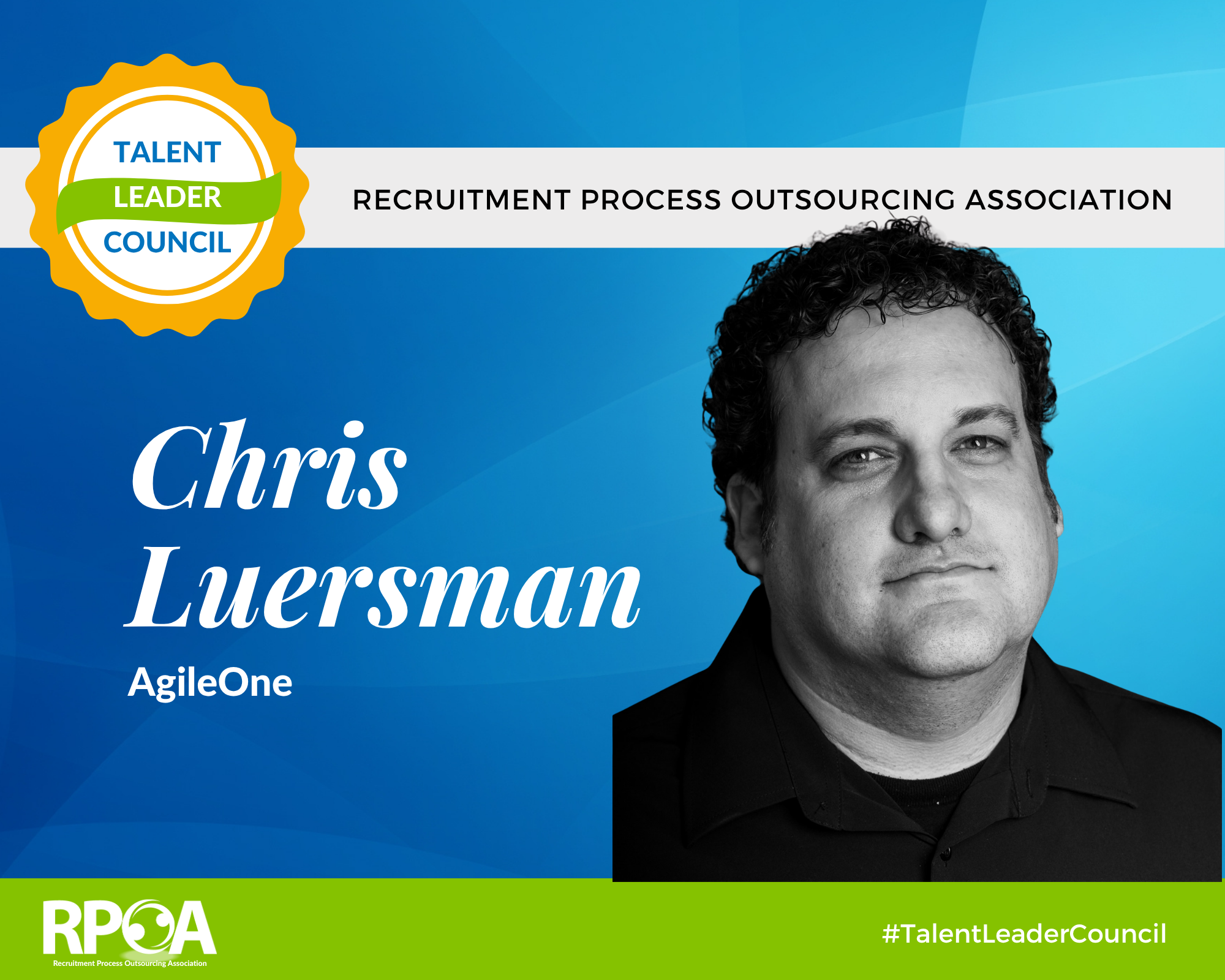
This article is based on an edited interview with Chris Luersman, Business Intelligence Manager, Talent Solutions at AgileOne, conducted by Lamees Abourahma, CEO of the Recruitment Process Outsourcing Association (RPOA), as part of the Talent Leader Council interview series. AgileOne, a valued Gold Member of the RPOA, recently published Building a Best-in-Class RPO Analytics Framework, which expands on many of the concepts discussed in this conversation.
Key Takeaways for Talent Acquisition Leaders
- Treat recruitment analytics as a business capability, not simply a reporting function.
- Build analytics on trusted, standardized data before investing in dashboards and AI.
- Customize recruitment metrics to support the decisions different stakeholders need to make.
- Establish governance and continuous improvement processes that keep analytics aligned with changing business priorities.
- Use AI to enhance recruiter productivity and business insight while maintaining data quality and human oversight.
Recruitment Analytics Begins with Business Strategy, Not Technology
Successful analytics initiatives rarely begin with software. They begin with understanding the business decisions leaders need to make. While technology enables analytics, strategy determines whether analytics generate meaningful business value. This principle aligns with AgileOne's recruitment analytics framework, which positions stakeholder alignment and business objectives as the starting point for every analytics initiative.
RPOA: Many organizations invest in reporting tools but still struggle to gain actionable hiring insights. Why?
Luersman: Organizations often collect large volumes of recruitment data across applicant tracking systems, CRM platforms, HRIS environments, and survey tools. Without standardized definitions, consistent processes, and integrated data sources, leaders risk making decisions based on incomplete or inconsistent information. Discovery should begin with understanding organizational objectives, stakeholder requirements, and the metrics that directly support business outcomes before technology solutions are configured.
As outlined in AgileOne's recruitment analytics framework, defining organizational goals and aligning recruitment metrics to measurable business outcomes establishes the foundation for long-term success. Rather than beginning with dashboards, organizations should first determine which business decisions analytics are intended to improve. That shift moves recruitment analytics beyond operational reporting and positions it as a strategic capability that informs workforce planning, hiring investments, and organizational performance.
"Good analytics start with good data and clear business requirements."
Chris Luersman, Business Intelligence Manager, Talent Solutions, AgileOne
High-Quality Data Creates Trust Across the Recruitment Process
The value of recruitment analytics depends entirely on the quality of the information behind it. As organizations adopt AI-enabled recruiting technologies and predictive analytics, the integrity of underlying recruitment data becomes even more important. AgileOne's framework describes data quality as the foundation upon which every meaningful insight is built.
RPOA: Why is data integrity so critical to effective recruitment analytics?
Luersman: Clean data requires standardized recruiting workflows, consistent recruiter activity, and clearly defined status changes throughout the hiring process. When recruiters capture information consistently and organizations establish common definitions for key metrics such as time-to-fill or candidate progression, analytics become trustworthy enough to guide strategic decisions.
The AgileOne white paper compares this stage to constructing the foundation of a home. Data quality, governance, centralized systems, and consistent definitions create the stability needed for meaningful reporting, forecasting, and AI-driven analysis. Without that foundation, even the most sophisticated dashboards simply visualize unreliable information.
For talent acquisition leaders, the lesson is clear. Investments in artificial intelligence, predictive analytics, and automation deliver the greatest value only after organizations establish disciplined recruiting processes, common metric definitions, and strong data governance.
"High-quality data is non-negotiable. It underpins every metric and every insight."
Chris Luersman, Business Intelligence Manager, Talent Solutions, AgileOne
One Analytics Framework Does Not Fit Every Organization
Executive leaders, recruiters, hiring managers, finance teams, and HR business partners all make different decisions. Effective recruitment analytics reflects those differences by delivering information that supports each audience's responsibilities rather than relying on one standardized dashboard.
RPOA: How should organizations customize recruitment analytics?
Luersman: While certain recruiting metrics remain universal, analytics should reflect each organization's hiring strategy and business priorities. Executive dashboards may emphasize workforce planning, hiring volume, financial performance, and overall recruiting effectiveness. Recruiters need operational metrics such as requisition workload, pipeline health, and candidate movement through each hiring stage. Hiring managers benefit from visibility into bottlenecks affecting interview scheduling and decision-making.
AgileOne's framework emphasizes role-based dashboards, executive summaries, recruiter-level reporting, AI-powered alerts, and customizable visualizations that align information with business responsibilities. The objective is not to create more reports. It is to deliver the right insight to the right audience at the right time.
As organizations increasingly look to Recruitment Process Outsourcing (RPO) providers for strategic guidance rather than transactional recruiting support, analytics has become an important differentiator. Buyers are placing greater value on providers that can deliver measurable business intelligence alongside recruiting execution.
Suggested Resource: 2026 RPOA Buyer Trends Study
Future-Ready Recruitment Analytics Requires Continuous Improvement
An analytics framework is not a one-time implementation. Business priorities evolve, labor markets change, and technology capabilities continue to advance. Like any strategic business capability, recruitment analytics requires ongoing governance and continuous refinement.
RPOA: Once organizations establish a recruitment analytics framework, how do they keep it relevant?
Luersman: Organizations should regularly review metric relevance, gather stakeholder feedback, evaluate new technologies, and provide ongoing training for recruiters and hiring leaders. Business priorities shift continuously, and analytics must evolve accordingly. Waiting too long between reviews increases the risk that dashboards no longer reflect the organization's strategic objectives.
Throughout the interview, Luersman compares recruitment analytics to maintaining a home. Building the structure is only the beginning. Long-term value comes from regular maintenance, thoughtful improvements, and adapting the framework as organizational needs evolve.
Artificial intelligence will undoubtedly accelerate these capabilities, automating repetitive reporting, identifying trends, and enabling more sophisticated forecasting. However, AI does not replace governance. Instead, it increases the importance of trusted data, clearly defined metrics, and disciplined analytics practices that allow organizations to make confident, evidence-based hiring decisions.
"AI helps automate routine analysis so people can spend more time making strategic decisions."
Chris Luersman, Business Intelligence Manager, Talent Solutions, AgileOne
Conclusion
Recruitment analytics is rapidly becoming a core business capability for organizations seeking to improve hiring performance, strengthen workforce planning, and respond more effectively to changing market conditions. As Chris Luersman explains, successful analytics programs begin with business strategy, depend on trusted data, and evolve through continuous governance rather than one-time implementation.
For Recruitment Process Outsourcing providers and enterprise talent leaders alike, analytics represents an opportunity to transform recruitment from an operational function into a strategic source of competitive advantage. By establishing standardized metrics, strengthening data quality, customizing reporting for different stakeholders, and responsibly incorporating artificial intelligence, organizations can make faster, more informed hiring decisions while improving candidate experiences.
As this conversation illustrates, the future of Recruitment Process Outsourcing extends beyond filling positions. Increasingly, organizations are looking to their RPO partners for data-driven insights that improve workforce planning, hiring outcomes, and business performance. Through the Talent Leader Council, the Recruitment Process Outsourcing Association continues to convene industry leaders, share evidence-based perspectives, and advance understanding of the trends shaping the future of talent acquisition.